The Whole Shift
What you see from the floor is two people in a glass box. What you don't see is the day that preceded it.
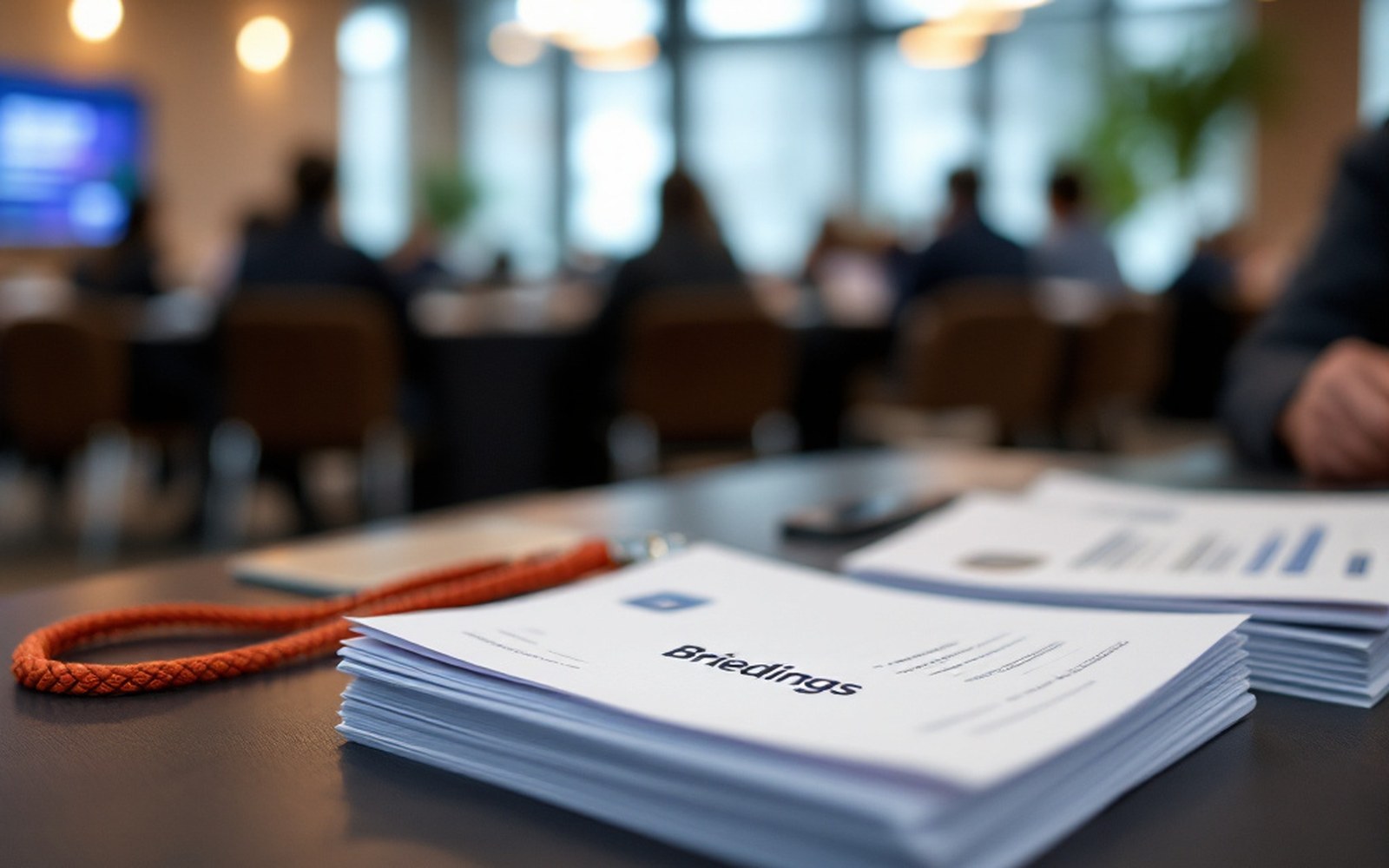
A meeting day is longer than the speaking day, and preparation is most of the work.
Before the microphone opens
An interpreter's working day begins well before the first delegate speaks. Documents arrive — agenda, speaker notes, prepared statements — and the booth pair reads them together, building shared vocabulary and flagging names, acronyms, and figures that will arrive fast under load. Numbers and proper nouns are the first things to degrade under cognitive pressure, so they get written down on a shared sheet between the two interpreters before the room fills.
The preparation phase has no fixed length; it expands to fill whatever the organiser provides. A well-documented standard governs translation, but conference interpreting has no equivalent document requirement — which means late or incomplete materials are the norm rather than the exception. Interpreters work with what they receive, and often request what they don't.
In the booth itself, the two interpreters divide the session into roughly thirty-minute active slots, one rendering while the other monitors, checks the shared notes, and listens for corrections to pass. The cognitive ceiling on sustained simultaneous output is real enough that AIIC, the international professional association, builds the alternation rule into its working conditions. Neither interpreter is idle during the passive slot: listening is work, and a missed correction can compound across an hour.
When the day closes, the pair does not simply leave. They debrief: anything that went wrong, any term that needed improvising, any speaker who departed without warning from a prepared text. In a long conference, that debrief feeds the next day's preparation. The loop is continuous.
What a delegate experiences as a seamless voice in the earpiece is the output of a structured rotation running on preparation, active handover and quiet correction — most of it invisible, all of it required by the acoustic and cognitive environment the booth is designed around.