Section 1 of 5
The pair
Why interpreters work in twos. Simultaneous interpreting was built at scale for one trial, with four working languages running at once and equipment nobody had used that way before.
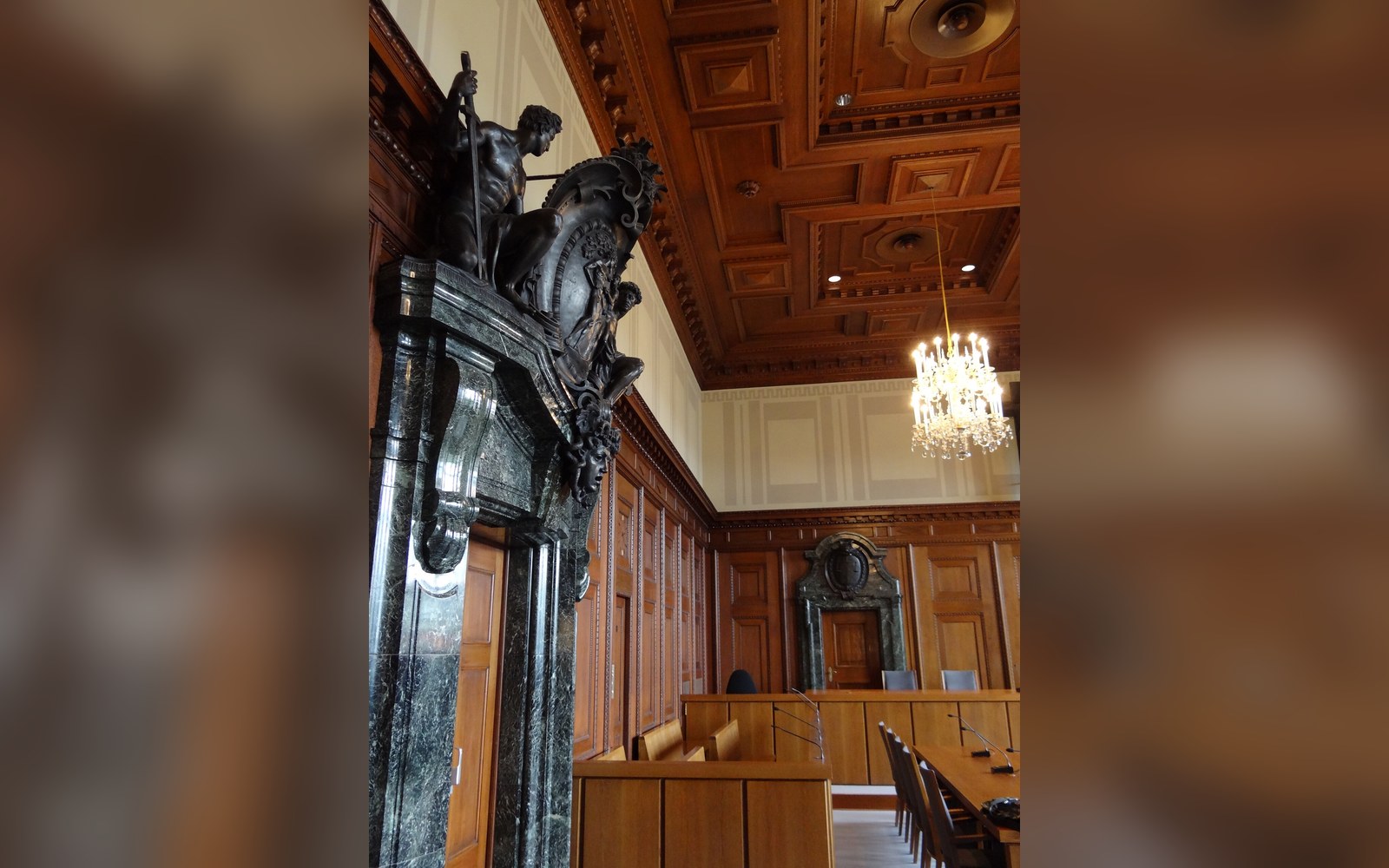
- Courtroom 600 and its four channels
Simultaneous interpreting was built at scale for one trial, with four working languages running at once and equipment nobody had used that way before.
- Thirty minutes
Interpreters swap at roughly half-hour intervals because accuracy measurably degrades after that, which is why the job is staffed in pairs.
- Relay, and what it costs
When no interpreter has both languages, the speech goes through a third — and every relay adds delay and one more chance to lose something.
- What the ear drops first
Under load the first things to go are numbers, names and lists, which is why they are written down rather than remembered.
- The whole shift
A meeting day is longer than the speaking day, and preparation is most of the work.