Filene, Finlay, a box of headsets
The first simultaneous interpreting equipment was a philanthropist's idea, an engineer's build, and a great deal of cable.
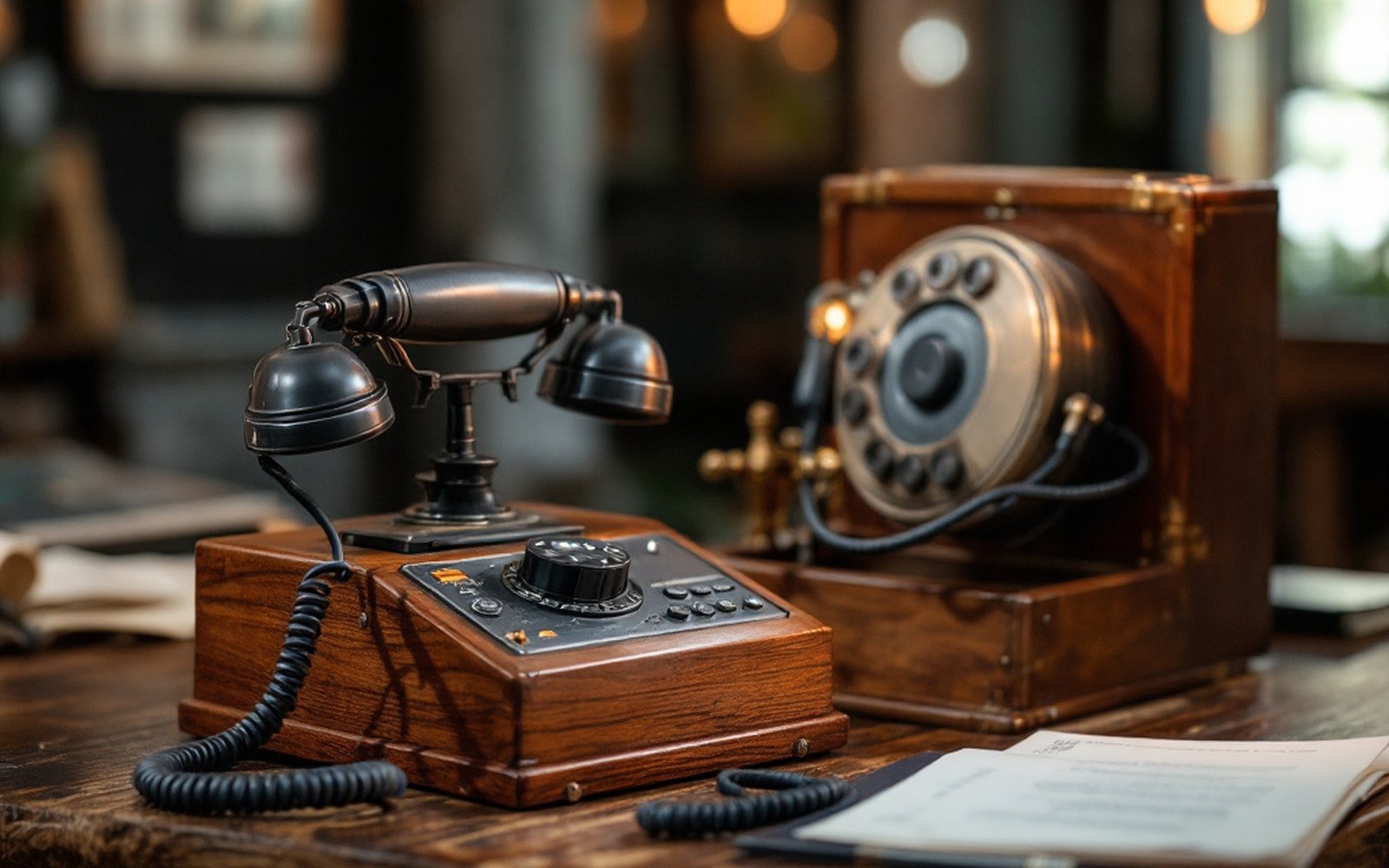
The first equipment was a philanthropist's idea, an engineer's build and a great deal of cable.
The money and the idea
Edward Filene made his fortune in Boston retail and spent a significant part of it on the problem of international understanding. By the early 1920s the League of Nations was sitting in Geneva and consecutive interpreting — the method in which a speaker stops, the interpreter renders the speech, and everyone waits — was consuming half the working day. Filene funded the search for something faster. The concept he backed was simple in principle: the interpreter listens and speaks at the same moment the delegate does, and the delegate hears the rendering in real time through a headset.
Turning that concept into working equipment fell to Gordon Finlay, an IBM engineer whom Filene commissioned to design and build the system. Finlay's apparatus consisted of a microphone at the speaker's position, a set of interpreter stations, and headsets distributed to the audience on channels corresponding to each language. The delegate chose a language, put on the headset, and heard the meeting without waiting for pauses. The technology was not exotic — it was careful electrical engineering applied to a specific problem — but the cabling and switching required to run it reliably across a large conference hall was substantial. Contemporary accounts describe the floor of an assembly room laced with wire.
Geneva, and then Nuremberg
The League of Nations first used the system in Geneva in the 1930s, initially in a limited way and always alongside the established consecutive method, which diplomats trusted and language professionals had refined to a high degree. Simultaneous was regarded with suspicion: could an interpreter really maintain fidelity while speaking almost in parallel with a source? Accuracy testing was not straightforward, and many conference professionals remained unconvinced for years.
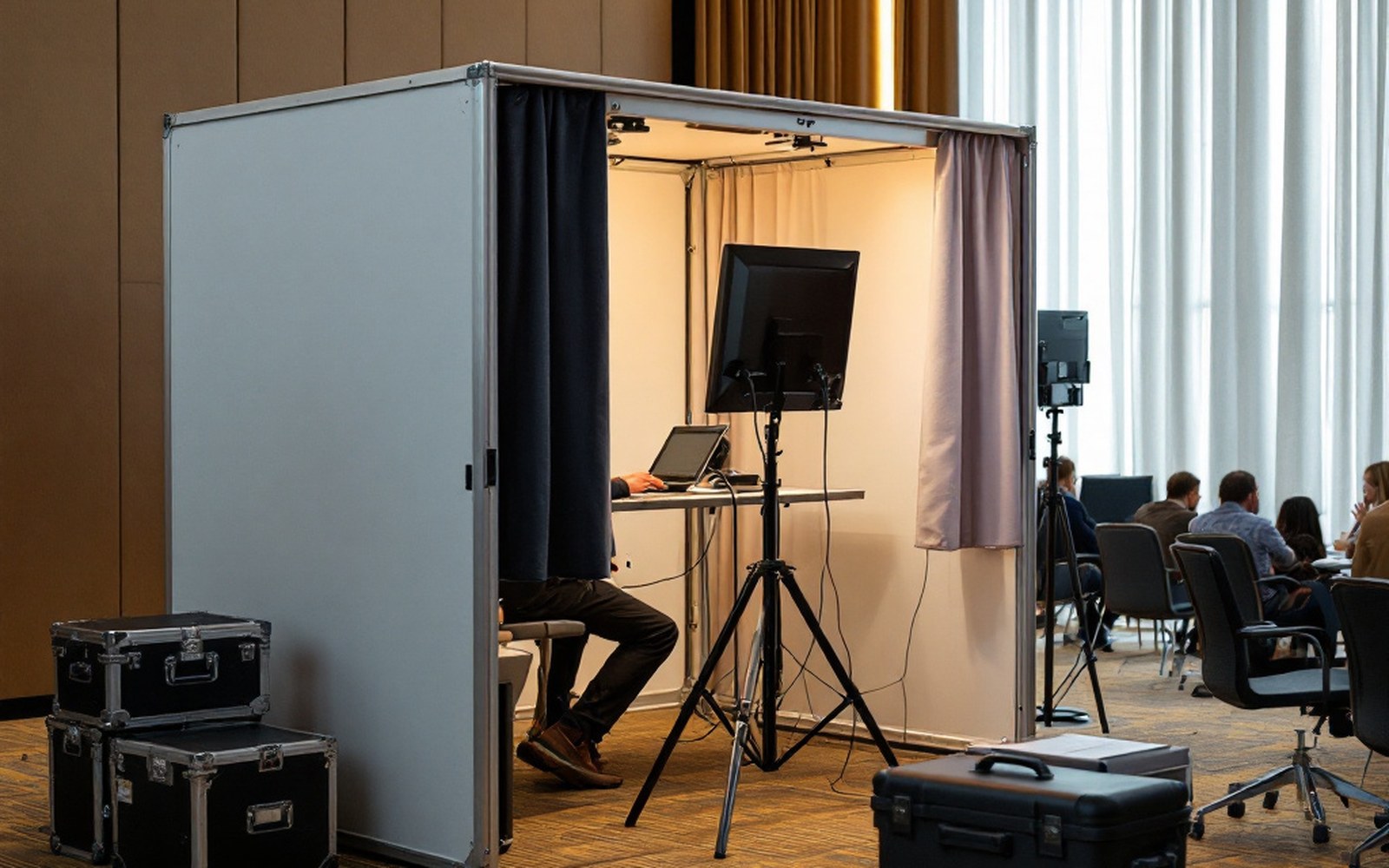
A built-in booth and a flight-cased one solve the same problem with entirely different compromises. Permanent and mobile
What changed the status of the technology permanently was the International Military Tribunal at Nuremberg, which opened in November 1945. Four working languages — English, French, Russian and German — had to run concurrently. Consecutive interpreting at that scale would have extended the trial by years. The tribunal adopted simultaneous interpreting because the alternative was operationally impossible, and Léon Dostert, who had served as General Eisenhower's personal interpreter, led the language team that delivered it. Courtroom 600 in Nuremberg became the proof-of-concept at institutional scale: the equipment worked, the interpretation held, and the trial completed in under a year.
What the box actually contained
Filene and Finlay's original apparatus belongs to a generation of technology that looks primitive now but defined the logical architecture still in use. Each interpreter had a microphone, a monitor channel carrying the floor, and a rotary control to choose the source language. The delegate's panel offered a selector for the available language channels plus a volume control. The coordination between channels — ensuring that when a delegate spoke, the correct interpreter's microphone was live and the right channel reached the right headset — was managed by a technician at a patch panel.
The interpreter hears the floor a fraction before the audience does, and that fraction is engineered. Sound arrives before speech
IBM held the commercial rights to the Filene-Finlay system for some years, and the equipment was known in conference circles as the "IBM system." The company later sold those rights, and other manufacturers entered the market. By the time the United Nations had established its permanent headquarters in New York and its Office at Geneva, the installed booth infrastructure was becoming a specification in its own right: a fixed physical space with defined sightlines, sound insulation and air supply, not just a table with microphones. AIIC — the International Association of Conference Interpreters, founded in 1953 — would push for those specifications to be standardised, eventually feeding into the norms that now govern what a conference booth must provide.
The headset itself changed very little in its essential form. What changed was everything around it: the routing hardware, the channel capacity, the quality of sound isolation, and eventually the shift from analogue to digital signal paths. But the governing idea — interpreter hears, interpreter speaks, delegate listens without waiting — was fixed by an American retailer with a social project, an engineer with a soldering iron, and enough cable to cross a Geneva assembly room. The logic has not needed revision since.