
Booth 3 · channel 4 · on mic
Thirty minutes,
then you swap
Simultaneous interpreting is staffed in pairs and rotated at roughly the half hour, because accuracy degrades measurably before stamina does. The second interpreter never leaves the booth.
One shift, from the tap on the shoulder to the swap
The headphones go on and the clock starts
Interpreters swap at roughly half-hour intervals because accuracy measurably degrades after that, which is why the job is staffed in pairs.

Under load the first things to go are numbers, names and lists, which is why they are written down rather than remembered. Read the piece
Three to five seconds behind, permanently
When no interpreter has both languages, the speech goes through a third — and every relay adds delay and one more chance to lose something.

Everything in the booth works, or nobody in this room understands the session
A meeting day is longer than the speaking day, and preparation is most of the work. The whole shift
Swap. Then the other one has half an hour of it.
Simultaneous interpreting was built at scale for one trial, with four working languages running at once and equipment nobody had used that way before.
The same rule, a different unit
Two passes,
two people
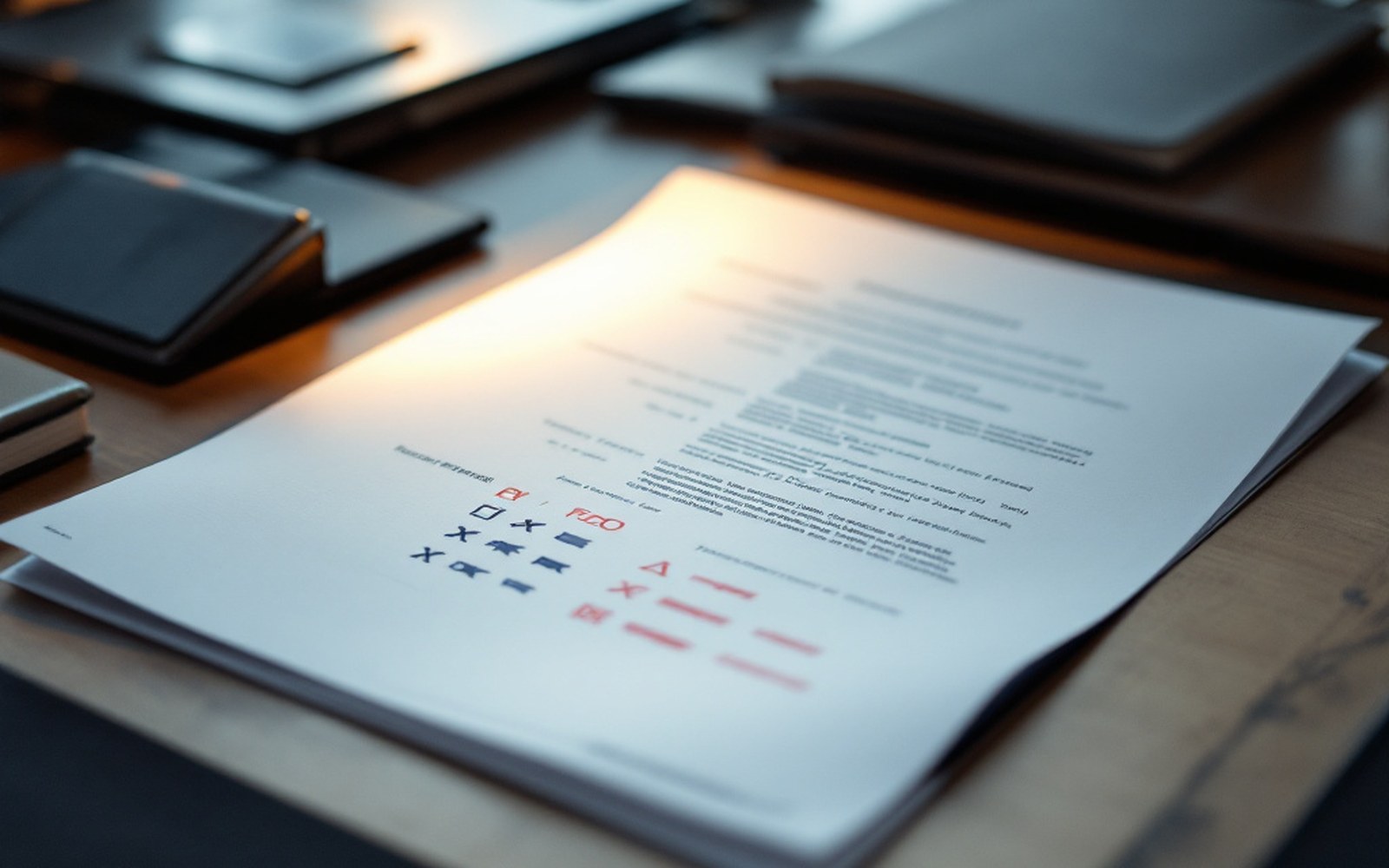
Translation is measured in readings rather than minutes. ISO 17100 requires a second qualified translator to compare the target against the source — a step, not a favour — and a record of who did it. Red is the translator's own pass, blue the reviser's; they are kept apart so the file can say who changed what.
What ISO 17100 asks for · A step in the wrong order · The section
One object. One name. Written down once, then defended.
Terminology work is deciding that within this document set a thing has exactly one designation, and enforcing it. One object, one name
Also on the site
A booth is a specification
The equipment, and where it came from.
Who decides the name
Terminology as a discipline.
Colophon
Institutions and suppliers whose working world spans the booth, the brief, and the terminology table.