Luxembourg
The Court's Language, Not the City's

Court work is a different discipline again: precision under precedent, with the text as the instrument.
Luxembourg City is home to the Court of Justice of the European Union, and that fact shapes everything about language work done there. This is not conference interpreting, not the rolling multilingual conversation of a Brussels committee room or a Geneva assembly hall. It is something more constrained and, in its way, more demanding: language work where the text is the instrument of law.
The Court operates across all official EU languages, currently twenty-four, but its working language is French. Judgments are deliberated and drafted in French before they are translated into the other official languages. That French text is the authoritative version. The translation is not a convenience; it is the legal record in that language, and a mistranslation is not merely an error — it is a divergence between two instruments of equal standing, one of which will be applied by a national court that cannot necessarily read the other.
Precision Under Precedent
The translation work at the Court sits within its own Directorate-General for Multilingualism, separate from the Commission's translation service. At Luxembourg, the specific pressure is terminological. EU law has developed its own body of concepts — some borrowed from member-state traditions, some created specifically for the Community legal order — and a term used in a 1964 judgment carries weight in a case decided today. The translator is not choosing a word; she is continuing a conceptual chain that runs through decades of case law. The institutional term base is not a luxury in this environment; it is a record of decisions already made by the Court itself.
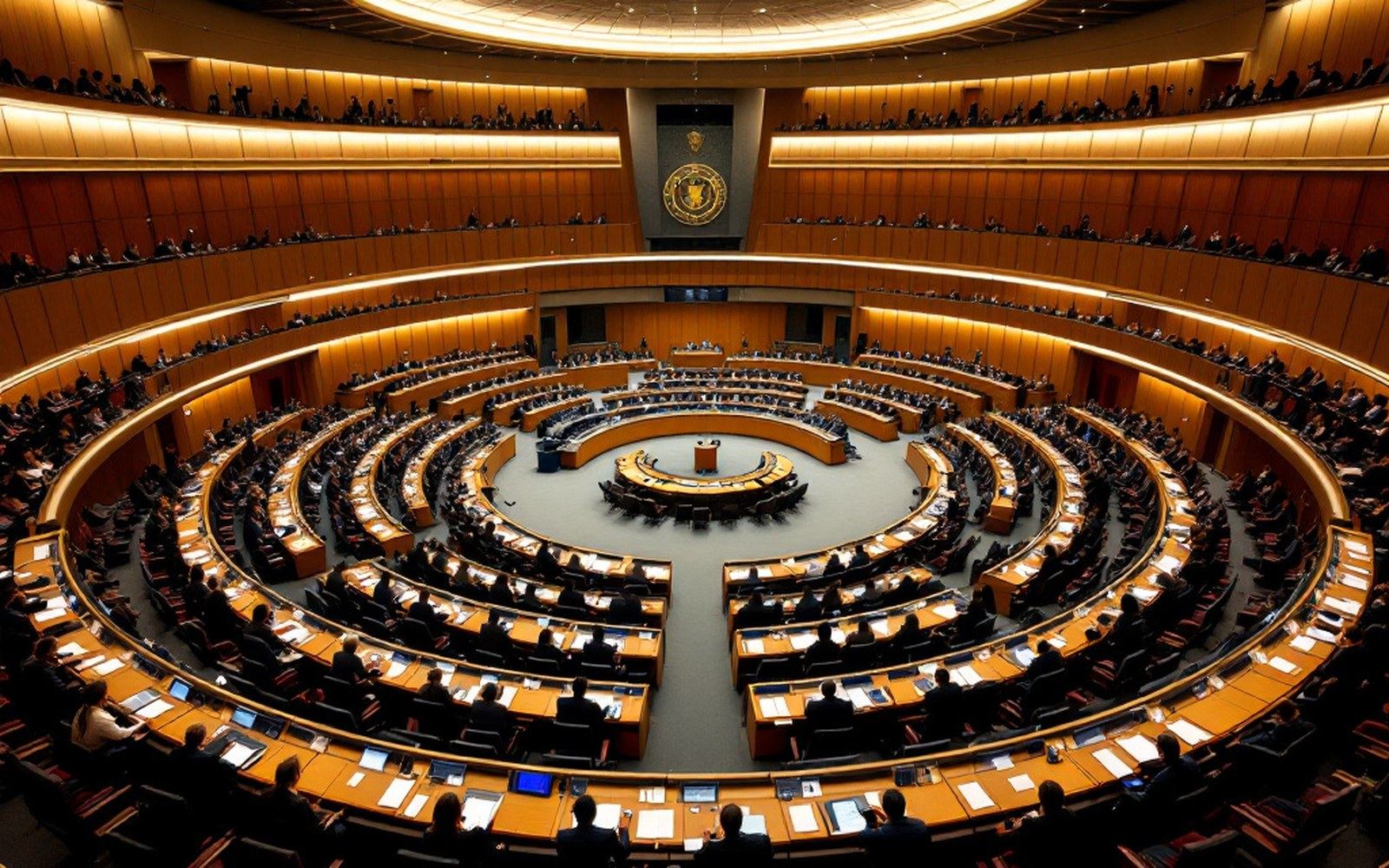
Multilateral conference work, and the standing arrangements that make it repeatable. Geneva
Consistency is not a stylistic preference here. When the Court has used a particular phrase to describe a legal concept, that phrase corresponds to a specific holding. Changing it risks importing ambiguity into a system that runs on the elimination of ambiguity. The revision requirement that appears in ISO 17100 — a second qualified person comparing the translation against the source — is standard practice in any serious translation workflow, but at the Court of Justice it carries additional weight, because the second reader is checking not only accuracy against the source text but consistency against a body of precedent that may span half a century.
Interpreting at the Court differs too. Hearings are conducted in the language of the case, which may be any official EU language, and interpreted into French for the bench and into other languages for parties who need them. A case brought by a Polish company against a Hungarian authority will have its hearing language determined by procedural rules; the interpreters must be ready to work from and into combinations that would be unusual elsewhere. The relay chains that are routine in very large conferences — where a speech goes through a pivot language before reaching the listener — can appear here in a context where a single mistaken relay is embedded in a judicial record.

The largest concentration of institutional language work in the world, and the logistics that go with it. Brussels
The pressure is not the volume pressure of a Geneva plenary or the pace pressure of a Brussels trilogue. It is the pressure of permanence. A spoken interpretation at a hearing becomes part of the procedural record; a translated judgment enters the corpus of law. Neither disappears. Both are retrievable, citable, potentially decisive. The Court's published case-law database makes this visible in a way that concentrates the mind: every rendered judgment in every official language, searchable, placed next to its counterparts.
Luxembourg is a small city with a particular kind of institutional density. It is not the largest site of EU language work — Brussels holds that distinction — but it is the one where the consequence of imprecision is most legible, because the text, once published, stands as law. The discipline required there is less about fluency than about fidelity to a living system of meaning that the translators and interpreters did not invent and are not free to modify.